
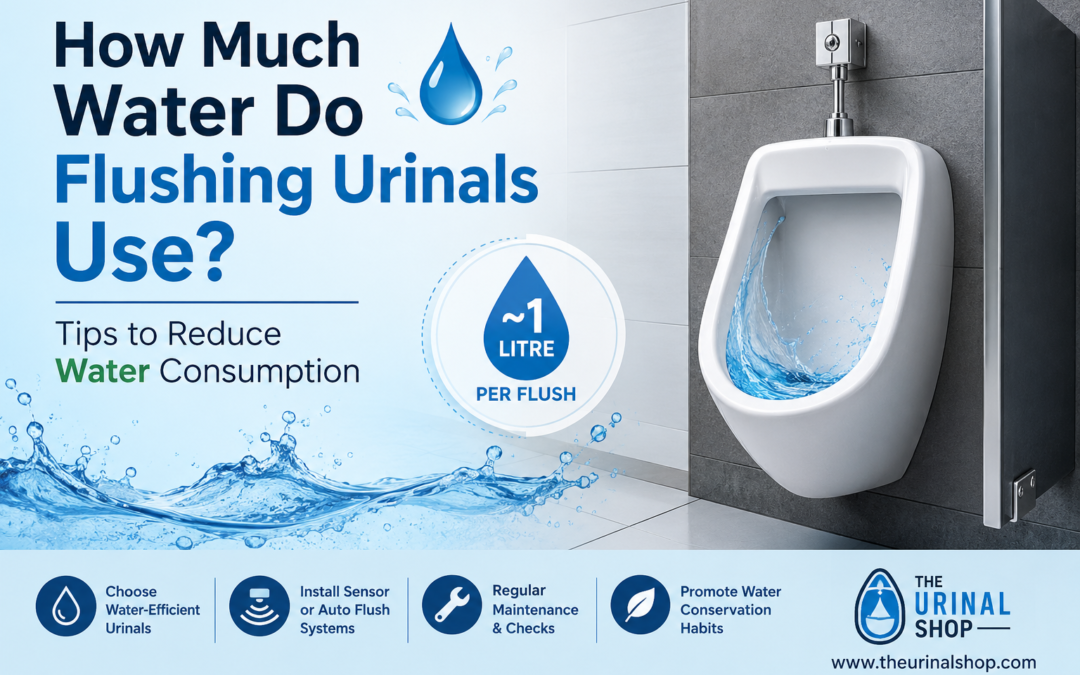
Water is one of the highest ongoing costs in commercial washrooms, and flushing urinals play a significant role in overall consumption. The amount of water used depends on the type of urinal, the flushing technology, and how often the fixture is activated. By choosing water-efficient flushing urinals and using the right flushing controls, businesses can significantly reduce water usage while maintaining hygiene and performance.
Whether you manage an office, school, shopping center, sports venue, or hospitality business, understanding how flushing urinals use water can help lower utility bills and support sustainability goals.
How Much Water Do Flushing Urinals Use?
The amount of water a flushing urinal uses varies depending on its design and flushing method. Older systems regularly consume considerably more water than modern models, while newer technologies are designed to deliver effective flushing with less water.
As a general guide:
| Urinal Type | Typical Water Use |
| Older manual systems | 3–4 liters per flush |
| Standard flushing urinals | 1–2 liters per flush |
| Modern water-efficient flushing urinals | 0.5–1 liter per flush |
| Waterless urinals | 0 liters per flush |
Although these figures may seem small, they add up quickly in busy commercial washrooms where a single urinal may be used hundreds of times every day.
For businesses with multiple washrooms, upgrading to water-efficient flushing urinals can result in substantial long-term water savings.
Shop Our ProductWhy Water Consumption Matters in Commercial Washrooms
Every unnecessary flush increases water usage, operating costs, and environmental impact. In busy facilities, even small improvements in flushing efficiency can save thousands of liters each year.
Reducing water consumption helps businesses:
- Lower water bills
- Improve environmental performance
- Reduce maintenance caused by excessive flushing
- Meet sustainability objectives
- Improve overall washroom efficiency
Choosing quality water-efficient flushing urinals is often one of the simplest upgrades that delivers immediate long-term benefits.
What Affects How Much Water a Urinal Uses?
Several factors influence the amount of water consumed by a flushing urinal.
Flush Volume
The amount of water released during each flush is the biggest factor.
Modern urinals are engineered to clean the bowl effectively using much less water than older systems. Selecting water-efficient flushing urinals with lower flush volumes can dramatically reduce annual consumption.
Number of Daily Users
A urinal used twenty times per day consumes far less water than one used several hundred times.
High-traffic locations such as:
- Shopping centres
- Schools
- Stadiums
- Airports
- Entertainment venues
benefit the most from efficient flushing technology.
Flush Control Technology
The type of commercial urinal flush system installed determines when and how often flushing occurs.
Older systems may flush unnecessarily, while newer technologies activate only when required.
Types of Commercial Urinal Flush Systems
The flushing mechanism plays a major role in water efficiency.
Manual Flush Valves
Manual systems require the user to activate the flush after use.
Advantages include:
- Simple operation
- Reliable performance
- Lower installation costs
However, inconsistent user behavior can sometimes lead to unnecessary water use or poor hygiene.
Automatic Flushing Systems
Automatic flushing urinals use sensors to detect when the user has finished before activating a controlled flush.
Benefits include:
- Touch-free hygiene
- Consistent flushing
- Reduced water waste
- Better user experience
Because the flush only activates when needed, sensor-operated systems are increasingly popular in modern commercial buildings.
Timed Flush Systems
A timer-based commercial urinal flush system flushes at scheduled intervals rather than after every individual use.
These systems are commonly installed in:
- Schools
- Sports facilities
- Stadiums
- Public amenities
When correctly programmed, they reduce unnecessary flushing while maintaining hygiene during busy periods.
How Water-Efficient Flushing Urinals Reduce Water Usage
Modern water-efficient flushing urinals combine improved bowl design with advanced flushing technology to maximize cleaning performance while minimizing water use.
Key features include the following:
- Low-volume flush cycles
- Improved water distribution
- Efficient rim design
- Better waste removal
- Reduced splashback
Rather than simply using more water, today’s designs use water more effectively.
This means less water is required to achieve a clean and hygienic flush.
Choosing the Right Commercial Urinal Flush System
The ideal commercial urinal flush system depends on how the washroom is used.
Offices
Office washrooms generally experience moderate daily traffic.
Recommended options include:
- Wall-hung flushing urinals
- Sensor flush valves
- Low-flow flushing systems
These provide excellent hygiene while keeping water consumption under control.
Schools
School washrooms experience heavy usage throughout the day.
Important considerations include:
- Durability
- Reliable flushing
- Easy maintenance
- Water-saving technology
Timer-controlled systems are often suitable for high-use environments.
Shopping Centres
Large shopping centers require flushing systems capable of handling continuous traffic.
Many facilities benefit from:
- Sensor-operated flush systems
- Heavy-duty commercial valves
- Low-water flush technology
These systems help maintain cleanliness while reducing unnecessary water usage.
Public Facilities
Public toilets often operate around the clock.
Choosing durable, water-efficient flushing urinals with dependable flushing controls helps minimize maintenance while improving operational efficiency.
Simple Tips to Reduce Water Consumption
Reducing water use doesn’t always require replacing every fixture.
Several practical maintenance steps can improve efficiency.
Check for Constant Running Water
A continuously running valve can waste enormous amounts of water.
Regular inspections help identify:
- Worn diaphragms
- Faulty valves
- Sensor problems
- Sticking solenoids
Fixing these issues early prevents unnecessary water loss.
Maintain Your Flush System
Every commercial urinal flush system should be inspected on a routine schedule.
Maintenance includes:
- Cleaning valves
- Checking sensors
- Replacing worn components
- Inspecting water pressure
Preventative servicing improves performance while extending equipment life.
Upgrade Older Equipment
Older flushing technology often uses considerably more water than modern alternatives.
Replacing outdated systems with water-efficient flushing urinals can significantly reduce annual operating costs.
Use Quality Components
Choosing reliable flush valves, sensors, and replacement parts helps maintain consistent performance.
Well-designed products require fewer repairs and continue operating efficiently over time.
Why Choosing the Right Supplier Matters
Not every flushing urinal is designed for Australian commercial environments.
Working with an experienced supplier helps ensure you choose products that suit your application, traffic levels, and maintenance requirements.
The Urinal Shop offers a range of flushing urinals suitable for the following:
- Offices
- Schools
- Shopping centres
- Hospitality venues
- Public amenities
- Commercial buildings
Along with urinals, you’ll also find flush valves, sensors, replacement parts, and accessories designed to support long-term performance.
Final Thoughts
Water consumption is an important consideration for every commercial washroom. While individual flush volumes may seem small, they quickly add up in busy facilities.
Installing water-efficient flushing urinals, selecting the right commercial urinal flush system, and performing regular maintenance can dramatically reduce water usage without compromising hygiene or user experience.
Whether you’re upgrading an existing washroom or planning a new commercial project, investing in efficient flushing technology delivers long-term savings and improved sustainability.
Ready to Upgrade Your Commercial Washroom?
Looking for reliable flushing urinals designed for Australian commercial environments?
Browse The Urinal Shop’s range of flushing urinals today to find wall-hung models, flush valves, sensors, and complete flushing solutions that help reduce water consumption while delivering dependable performance.
Frequently Asked Questions
How much water does a flushing urinal typically use?
Most modern flushing urinals use between 0.5 and 2 liters of water per flush, depending on the model and flushing technology. Older systems may use considerably more water.
Are water-efficient flushing urinals worth installing?
Yes. Water-efficient flushing urinals reduce water consumption, lower operating costs, and improve sustainability without sacrificing flushing performance.
What is a commercial urinal flush system?
A commercial urinal flush system controls how and when a urinal flushes. It may include manual valves, sensor-operated controls, or timer-based flushing systems depending on the application.
Are automatic flushing urinals more water-efficient?
In many commercial settings, automatic flushing urinals help reduce unnecessary flushing because sensors activate only when required, improving both hygiene and water efficiency.
How can businesses reduce water consumption in commercial washrooms?
Businesses can reduce water usage by installing efficient flushing urinals, maintaining flush valves and sensors, repairing leaks promptly, and upgrading older flushing systems to modern water-saving technology.
How often should commercial flush systems be maintained?
Routine inspections every few months are recommended, with more frequent servicing in high-traffic facilities such as schools, shopping centres and public amenities. Regular maintenance keeps the system operating efficiently and helps prevent unnecessary water waste.
