
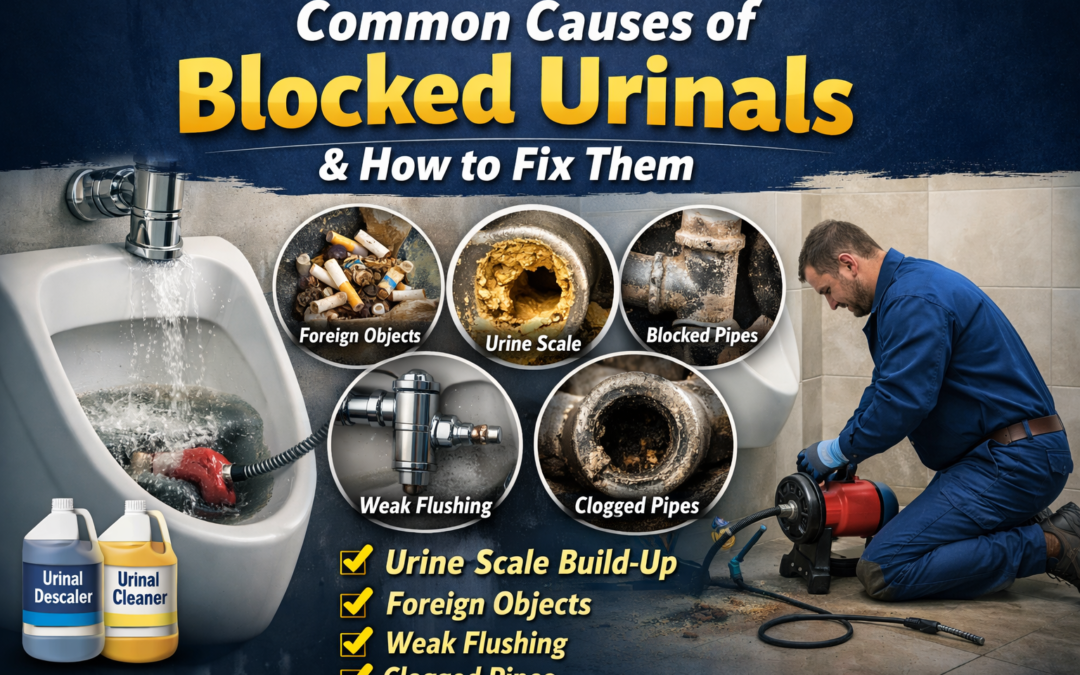
Blocked urinals are one of the most common—and most frustrating—issues in commercial bathrooms. They lead to foul odours, poor hygiene, unhappy patrons, and in some cases, costly plumbing repairs.
The good news? Most blocked urinals are caused by a handful of predictable faults, and many can be prevented or fixed with the right approach.
Below, we break down the most common causes of blocked urinals, how to identify them, and what you can do to fix (and prevent) the problem.
1. Urine Scale (Uric Acid Buildup)
The Problem
Urine contains uric acid, which crystallises over time and hardens inside traps and waste pipes. This scale narrows the pipe diameter, slows drainage, traps debris, and eventually causes full blockages.
Warning Signs
-
Slow draining urinal
-
Persistent ammonia or “urine” smell
-
Repeated blockages in the same fixture
How to Fix It
-
Use Banish Urinal Maintainer & Descaler designed to dissolve uric acid (standard cleaners won’t touch it).
-
Allow sufficient dwell time so the product can break down hardened scale.
-
Flush thoroughly after treatment.
How to Prevent It
-
Implement routine descaling as part of your cleaning schedule (monthly or quarterly depending on usage).
-
Avoid relying on bleach alone—it disinfects but does not remove scale.
2. Foreign Objects in the Trap
The Problem
Cigarette butts, chewing gum, paper towels, bottle caps, and even coins often end up in urinals—especially in pubs, clubs, stadiums, and schools.
Warning Signs
-
Sudden blockage
-
Water backing up or pooling in the bowl
-
Gurgling noises
How to Fix It
-
Remove the urinal trap where possible and manually clear the obstruction.
-
Use a flexible drain auger for deeper blockages.
How to Prevent It
-
Install urinal screens or grates to stop objects entering the waste pipe.
-
Replace screens regularly—blocked screens cause splashback and user frustration.
3. Insufficient or Incorrect Flushing
The Problem
Low flush volumes, blocked flush spreaders, misaligned flush pipes, or failing valves can prevent waste from being properly cleared, allowing scale and debris to build up faster.
Warning Signs
-
Urine residue left after flushing
-
Inconsistent or weak flush
-
Odour issues despite regular cleaning
How to Fix It
-
Check flush volume and adjust if possible.
-
Clean or replace blocked flush spreaders.
-
Service faulty valves or sensors.
How to Prevent It
-
Schedule annual valve servicing in high-use venues.
-
Ensure the flush system is matched correctly to the urinal type.
4. Blocked or Poorly Maintained Waste Pipes
The Problem
Older plumbing systems, undersized waste pipes, poor fall, or previous build-ups can restrict flow and cause recurring blockages.
Warning Signs
-
Multiple urinals backing up
-
Slow drainage across the whole bathroom
-
Blockages returning shortly after clearing
How to Fix It
-
Mechanical drain cleaning (jetting or augering).
-
In severe cases, pipe replacement or re-grading may be required.
How to Prevent It
-
Regular preventative descaling and flushing programs.
-
Avoid allowing scale to reach “hard rock” stage—it’s far more expensive to remove later.
5. Incorrect or Incompatible Cleaning Chemicals
The Problem
Using thick gels, waxy cleaners, or products not designed for urinals can leave residue inside the trap, contributing to blockages over time.
Warning Signs
-
Sticky residue in traps
-
Faster-than-normal scale formation
-
Declining drainage despite “clean” appearance
How to Fix It
-
Flush the system with warm water (where allowed).
-
Switch to low-residue, urinal-specific cleaners.
How to Prevent It
-
Train cleaning staff on correct chemical selection.
-
Follow manufacturer dilution ratios—stronger is not better.
6. Waterless Urinal Maintenance Failures (If Applicable)
The Problem
Waterless urinals rely on cartridges, seals, or liquid barriers. If these are not replaced or serviced on schedule, blockages and odours are inevitable.
Warning Signs
-
Strong smells
-
Slow drainage
-
Overflow during peak use
How to Fix It
-
Replace cartridges or seals as per manufacturer guidelines.
-
Clean waste lines with approved waterless-safe products.
How to Prevent It
-
Stick to a strict cartridge replacement schedule.
-
Never use standard acidic or caustic cleaners unless approved.
Final Thoughts: Prevention Is Cheaper Than Repair
Most blocked urinals aren’t plumbing failures—they’re maintenance failures. With the right products, correct cleaning methods, and a preventative schedule, the majority of blockages can be avoided entirely.
A proactive approach means:
-
Fewer emergency call-outs
-
Happier customers and staff
-
Longer lifespan for your urinals and pipework
If you’re managing a high-traffic venue, prevention isn’t optional—it’s essential.
