
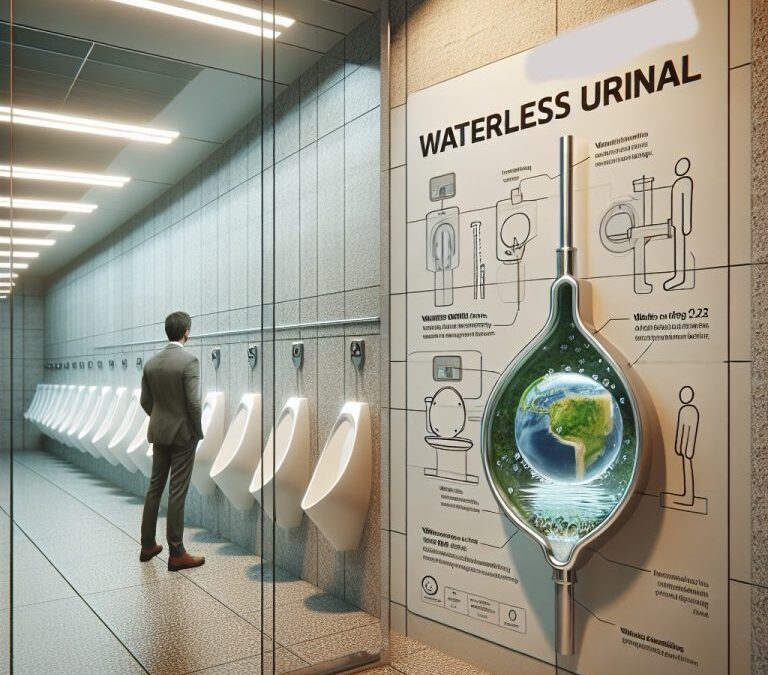
Odor-free, waterless urinals work by using a lightweight sealant liquid or a mechanical trap to block sewer gas from rising back through the drain, rather than relying on a flush of water to carry odor away. This is the exact opposite of how most people assume urinals stay fresh, and it’s why a correctly maintained waterless system can be less smelly than a traditional flush urinal, not more. Below, we break down the two sealing methods, the design features that keep odor locked in, and why waterless urinals Australia-wide have become the default choice for high-traffic commercial washrooms.
Why People Assume Waterless Urinals Will Smell
It’s a fair assumption. Without water, where does the odor go? In a traditional urinal, a flush physically pushes urine and any smell down the pipe. Take the water away, and it seems logical that odor would simply sit there and build up.
In practice, the opposite happens. Odor-free, waterless urinals don’t rely on volume or force to manage smell—they rely on a permanent physical barrier that sits between the urine and the open air of the washroom, 24 hours a day, whether the urinal has just been used or has sat idle overnight.
The Two Ways Waterless Urinals Block Odour
1. Liquid Sealant (Oil-Based Trap Systems)
Most oil-based, waterless urinals use a barrier liquid—a sealant that’s lighter than urine and floats as a thin film across the surface of the trap. Because the liquid can’t mix downward into the waste below it, it forms a continuous seal—they seal that.
Let urine pass through and drain away underneath it
Closes back over the surface immediately after
Physically blocks sewer gas and ammonia vapour from rising into the room
This is the method used in Uridan, ANZA, and Falcon Freesia waterless urinals, all of which use a cartridge or trap topped up with a barrier oil such as AquaLok.
2. Mechanical Cartridge Systems (No Liquid Required)
Some waterless urinals use a one-way mechanical seal instead of, or alongside, a liquid barrier. Cartridges such as the Ecotrap use an internal membrane or float mechanism that opens under the weight of liquid passing through, then closes again to block odor from below—similar in principle to a household drain trap, but engineered to work without a constant flow of flush water.
IFO Cero systems use a similar approach, with a removable trap section designed to be cleaned regularly rather than fully replaced, giving facilities managers a lower-maintenance option for sites without constant servicing.
Why Odour Free Waterless Urinals Actually Outperform Flush Systems
A flush urinal only clears odour when it’s flushed. Between flushes—especially overnight or in a quiet office bathroom—the trap can sit with stagnant urine and no active seal, which is often where smell complaints originate.
Odour-free waterless urinals remove that gap entirely. The seal is always in place, always working, regardless of how recently the urinal was used. That’s a meaningful difference.
- Offices and shopping centers, where washrooms sit unused for long stretches outside business hours
- Schools, where consistent hygiene matters but constant supervision of flush systems isn’t realistic
- Stadiums and heavy-use pubs, where bursts of use can overwhelm a flush valve’s ability to keep pace
What Actually Causes a Waterless Urinal to Smell
When a waterless urinal starts to smell, it’s rarely because it’s waterless—it’s because the seal has been compromised. Common causes include:
- The barrier oil has run low and needs topping up to the cartridge’s full dose
- Harsh cleaning chemicals (particularly bleach) have stripped the oil layer or damaged a mechanical seal
- Water has been poured into the bowl, flushing the barrier liquid through and breaking the seal
- The cartridge is overdue for replacement, and the mechanical seal is no longer closing properly
In every case, the fix is the same principle: restore the barrier, and the odour stops. This is why choosing genuine, water-marked cartridges and correct barrier oils matters more with waterless systems than almost any other washroom fixture.
Waterless Urinals Australia-Wide: Why the Category Has Grown
Waterless urinals Australia-wide have moved from a niche, eco-conscious choice to a mainstream commercial fixture, largely because the water savings are difficult to ignore. A single-flush urinal can use between 1 and 4 liters per flush; across a busy commercial site, that adds up to thousands of liters a year that a waterless system simply doesn’t use.
Combined with lower long-term running costs, fewer flush-valve failures, and reduced strain on aging plumbing, it’s easy to see why waterless urinals Australia-wide are now specified in new commercial fit-outs as standard, not as an add-on.
Are Waterless Urinals Suitable for Every Site?
Largely yes, provided the maintenance program matches the traffic. Sites that benefit most are high-footfall locations with predictable, moderate usage patterns and a cleaning team briefed on correct servicing—meaning no bleach in the bowl, and cartridges topped up or replaced on schedule rather than left until a complaint comes in. This makes waterless urinals for public toilets one of the strongest use cases for the category.
For genuinely extreme, unsupervised, high-traffic public sites, some facilities managers pair a waterless system with automatic flushing urinals in adjoining bathrooms to balance servicing load across a site—though a well-maintained waterless system will usually outperform both in running cost.
Choosing the Right Odour-Free Waterless Urinal for Your Site
Not every waterless urinal suits every washroom. The right choice depends on:
Traffic volume—busier sites need a cartridge with either a larger oil capacity or a more robust mechanical seal
Cleaning team familiarity—mechanical trap systems like IFO Cero can suit sites with less consistent servicing
Water efficiency targets—all waterless systems eliminate flush water, supporting WELS and sustainability goals
Budget—oil-based systems typically have a lower upfront cost; mechanical cartridge systems can reduce consumable costs over time
The Urinal Shop stocks Australia’s largest range of waterless urinals, including Uridan, ANZA, Falcon Freesia, and IFO Cero systems, along with genuine cartridges and barrier oils for every model.
Browse our full range of odour-free, waterless urinals and get site-specific advice from our team.
Frequently Asked Questions
Do waterless urinals really not smell?
Correctly maintained odour-free waterless urinals should not smell. Odour only appears when the barrier seal—liquid or mechanical—has been compromised, typically through low oil, harsh chemicals, or an overdue cartridge.
How do waterless urinals stop odour without water?
They use either a floating barrier oil that seals the trap while letting urine drain through or a mechanical cartridge that opens and closes to block sewer gas, similar to a household drain trap.
Are waterless urinals hygienic enough for public toilets?
Yes. They’re widely used in high-traffic public washrooms across Australia, provided cartridges are serviced on schedule, and cleaning staff avoid bleach or other harsh chemicals inside the bowl.
How often do waterless urinals need servicing?
This depends on usage and cartridge type, ranging from monthly top-ups on high-traffic sites to servicing every few months on lower-use sites. Mechanical cartridges are typically replaced two to four times a year.
What’s the difference between waterless urinals and sensor-flush systems?
Sensor-flush systems trigger a water flush after each use, while waterless urinals use a permanent seal and no water at all. Waterless systems generally offer lower running costs and greater water savings.
Need help choosing the right system for your site?
Get in touch with The Urinal Shop for expert advice, genuine parts, and Australia’s largest range of waterless urinals.
